
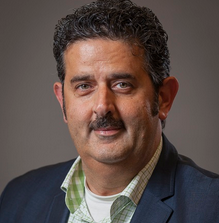
Yehia Mechref
直弧科技| Prof.
资料更新于:2026-07-23
嘉宾介绍
Dr. Yehia Mechref Prof. 美国德克萨斯理工大学
Department Chairman, Professor, and Director of the TTU Center for Biotechnology & Genomics
Education: Ph.D., Oklahoma State University
Postdoctoral Study, Indiana University
Research Area: Analytical Chemistry
Principal Research Interests
Analytical
Bioanalytical
Chemical Separation
Glycomics
Glycoproeomics/Proteomics
The current advances in bioanalytical methods and instrumentation have greatly facilitated the understanding of biological processes at the molecular level. Every living organism in its environment represents a biochemically unique system whose biological functions can be better understood through analytical measurements. Isolated analytical measurements, which may help assessing the state of health within the organisms under study, are now routinely being made. Distinguishing between the “apparently healthy” and “diseased” individuals in clinical chemistry assays is often complicated by the biochemical individuality which has been recognized as an experimental complication of acquiring data from human subjects. Moreover, this aspect commonly results in considerable ranges for both often exist.
The rapidly developing fields of genomics, transcriptomics, proteomics, glycomics, and metabolomics are generating a vast body of biochemical information which is only sorted out through Systems Biology. Systems Biology, here, is referring to the strategy of pursuing integration of complex data about the interactions in biological systems from diverse bioanalytical techniques using multidisciplinary tools and personnel. Many research laboratories have been focusing their efforts on the overwhelming task of characterizing proteins and their voluminous posttranslation modifications following the Human Genome Project and the subsequent efforts to characterize the genomes of model animals. Inquiries into the glycomes and metabolomes of physiological fluids and tissues have been prompted by the unprecedented advances in biomolecular characterization and quantification of proteins. The abality to address these inquiries have been mainly attributed to the methodological/technological advances in biomolecular mass spectrometry and microscale separation science, as well as to the greatly improved computational capabilities (bioinformatics) which is facilitating fast data visualization and interpretation. The overarching activities in my research group are focused on the utility of molecular mass spectrometry to understand biomolecular changes attributing to disease development and progression.
Glycomics and glycoproteomics continue to be highly dynamic and interesting research areas due to the needs to comprehensively understand the biological attributes of glycosylation in many important biological functions such as immune response, cell development, cellular differentiation/adhesion and host-pathogen interactions. Moreover, aberrant glycosylation for decades has been recognized as the attribute of many mammalian diseases, including osteoarthritis, cystic fibrosis and cancer. This being said, glycomic and glycoproteomic analyses remain to be analytically very challenging mainly due to the high complexity and microheterogeneity of glycosylation processes and machineries. Therefore, more cutting-edge-analytical approaches are needed to allow more comprehensive characterization of glycosylation and subsequently better understanding of its biological roles. The ultimate goal of the research activities of my group is the comprehensive characterization of glycoprotein glycosylation sites and microheterogeneity of such sites. Accordingly, we are developing several glycomic and glycoproteomic approaches facilitating the achievement of this ultimate goal. Since interpretation and processing of glycomic and glycoproteomic data is laborious and time consuming, we are also collaborating with bioinformatics experts to develop different bioinformatic tools aiding rapid and automated data interpretation and processing. These research activities are intended to facilitate the analysis of large numbers of biological samples, thus facilitating a better understanding of disease development and progression at a molecular level.
活动家作为专业第三方嘉宾邀约平台,依托互联网公开数据为您提供嘉宾信息展示服务。若您发现嘉宾信息需要更新或移除,请发送邮件或联系客服。
我们专注于根据您的具体需求(包括演讲议题、会议日期及活动预算等),为您精准匹配各领域专业嘉宾。
为高效服务,建议您提前准备好详细活动信息,并拨打客服电话:18911802888(工作日9:00-18:00)。
温馨提示:本服务仅限嘉宾邀约相关事宜,其他需求暂不处理,感谢您的理解与配合。