会议介绍
2017年医学与人类健康国际会议新一轮,征稿已正式启动,截止日期:2017年4月28日。
期盼广大从事医学,环境科学,食品卫生,生物技术,农业等领域的学者踊跃参与。
会议将围绕医学,人类健康等相关领域的最新热点及迫切需解决的问题以主题演讲,口头报告,海报展示等多种形式进行交流,力求内容丰富多彩。大会组委会诚挚邀请您莅临大会,您的参会必将给本次会议增光添彩!
June 23, 2017 Conference Registration
10:00-16:30
(including Registration and Getting the conference materials, etc.)
June 24, 2017 The day of the Conference
08:00--18:20 Conference Opening speech, keynote speech, oral and poster presentation, conference summary
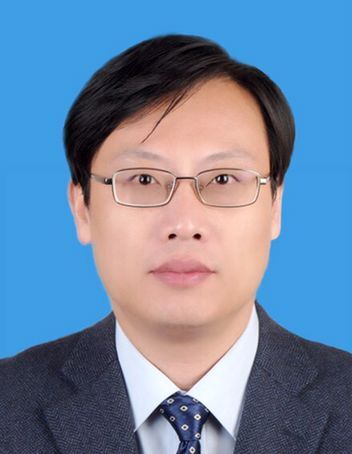
【会议嘉宾】Prof. Ching-Hsing Luo
Director, Center of Advanced Biomedical System, Department of Electric Engineering National Cheng Kung University, Taiwan, China.
Keynote Speech Title:
Pulse Mapping Analysis in Chinese Medicine Science
Biography:
Ching-Hsing Luo received master degrees in NTU (Taipei) Electrical Engineering & Johns Hopkins (Baltimore) Biomedical Engineering, and PhD degrees in Biomedical Engineering from Case Western Reserve University (Cleveland) & in Internal Medicine from Nanjing University of Chinese Medicine (Nanjing). He is also a licensed Chinese medicine physician. He was the inventor of the wildly known Luo-Rudy model, a single heart cell model. He is a Distinguished Professor in Electrical Engineering and Director of Center of Advanced Medical System, NCKU (Tainan). He was a vice Dean, College of Science, founding Chairman, Institute of Medical Science and Technology, and Director of Center of Medical Science and Technology in National Sun Yat-sen University (Kaohsiung). In the past decade, Dr. Luo developed an innovative Pulse Mapping instrument and a new methodology (called 3DPM) to successfully convert pulse feeling to dynamical images. Instead of traditional Pulse Wave Analysis, Dr. Luo proposed a new Pulse Mapping Analysis for holistic diagnosis. He also joins the Center for Dynamical Biomarkers, Harvard University (Boston). Current research interests include biomedical instrumentation, mixed signal IC design, assistive devices, single cell model, molecular simulation, rehabilitation medicine, pulse diagnosis, holistic medicine, and internal medicine.
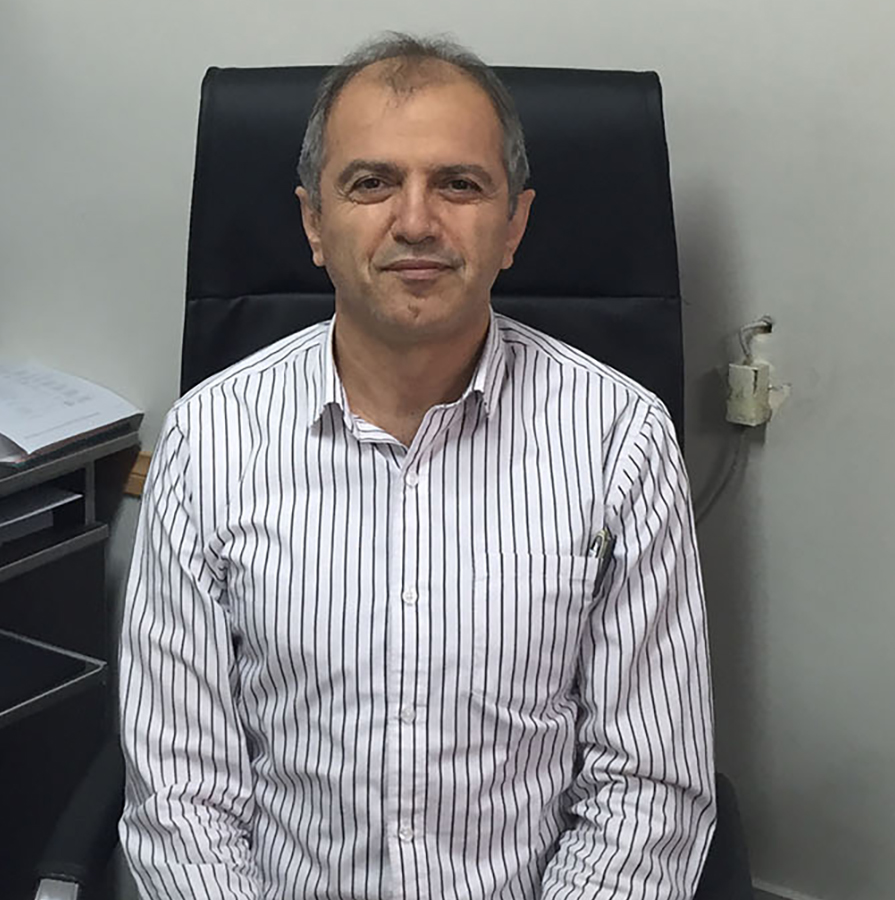
Prof. Ali A. Ensafi
Professor, Department of Chemistry, Isfahan University of Technology, Iran.
Biography:
Prof. Ali A. Ensafi was graduated in Chemistry (Ph.D.) in 1991 in Analytical Chemistry in Shiraz University (Iran). Then, he joined the Department of Chemistry at Isfahan University of Technology (Iran). He became full professor in 2001 at Isfahan University of Technology. He is head of Center of Excellence in Sensors & Green Chemistry of Ministry of Sciences, Research & Technology of Iran. He has H-index of 46 (Google scholar). He has published more than 380 ISI papers, and he has more than 150 international and/or national oral presentation. He has awarded three international awards. He is co-authors of three books (Academic Press & Springer publishers), and he is associate editor of Journal of the Iranian Chemical Society (Springer publisher), and Editorial Board of 13 International Scientific Journal as can be seen on his site as ensafi.iut.ac.ir. Prof. Ensafi is top 1% Scientists in Chemistry in ISI Essential Science Indicators and Top 1% Scientists in Sciences (Organization of the Islamic Countries). His research program is the development of sensors and biosensors (based electrochemical and spectroscopic methods), direct and real-time measurement of drug release from therapeutic nanoparticles, important biological and pharmaceutical compounds, and new energy source materials for fuel cell and storage energy, using new nanocompounds.
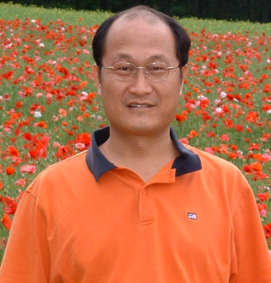
Dr. Jianyong Wu
Associate Professor, The Hong Kong Polytechnic University, China.
Biography:
Dr. Jian-Yong Wu completed his PhD and postdoctoral studies on Biochemical Engineering in 1994 at Queen’s University in Kingston, Canada. He is now an Associate Professor of Food and Bioprocess Technology at The Hong Kong Polytechnic University. He has published more than 150 peer-reviewed papers in reputed scientific journals, received over 3700 citations and an H-index 39 (Scopus). He has been serving as an editorial board member of Biotechnology Applied Biochemistry. His current areas of research interest include: Biochemical engineering and food processing technology; Properties and functions of natural polysaccharides from medicinal fungi and plants; Prebiotics and gut microbiota; Ultrasound-assisted processes for food and medicinal products.
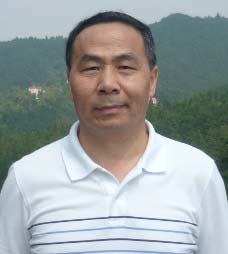
Prof. Bin Chen
Professor, Xi’an Jiaotong University, China.
Keynote Speech Title:
Laser Treatment of Port Wine Stain: Mechanism and Optimization
Abstract: Port wine stains (PWS) are congenital vascular malformations that progressively darken and thicken with age. Laser therapy is currently the most effective way in clinical practice for PWS. Pulsed dye laser (PDL) is a commonly used treatment for Port Wine Stain birthmarks (PWS). However, deeper components of PWS are often resistant to PDL. Deeper penetrating lasers, including the long pulsed Nd:YAG laser have been used, but carry greater risk. This study evaluates the distinct blood vessel thermal responses to visible (595 nm) and near infrared (1064 nm) lasers using animal and numerical models. In vivo dorsal skin chamber visualization experiment revealed that PDL irradiation was characterized by immediate blood vessel hemorrhage and Nd:YAG by complete blood vessel constriction, separately caused by preferential heating of the superior parts of large blood vessels, and more uniform heating of vessel walls. However, because of its relatively weak absorption by blood, single-pulse Nd:YAG laser requires high energy density to cause effective vessel damage, but may inflict undesirable burning to surrounding collagen. Multi-pulse laser has great potential in clinical treatment because it needs less energy density for each pulse. Experimental and theoretical study of the transient thermal effects of low-energy multi-pulse Nd:YAG laser on blood vessels was also conducted. It was revealed that thrombus that completely occludes the vessel lumen is the prerequisite for thread-like appearance, which is the desirable clinical end point. For multi-pulse treatment, laser parameters are recommended including frequency, pulse number, and incident energy in each pulse.
【会议门票】只参会不发表文章:1000元/人。